Leadwork & Roof Detailing
Skilled leadwork that keeps your roof watertight where it meets walls, chimneys and other roofs, from valleys and flashings to bespoke detailing.
- Free site assessments
- No-obligation quotes
- South West & Central England
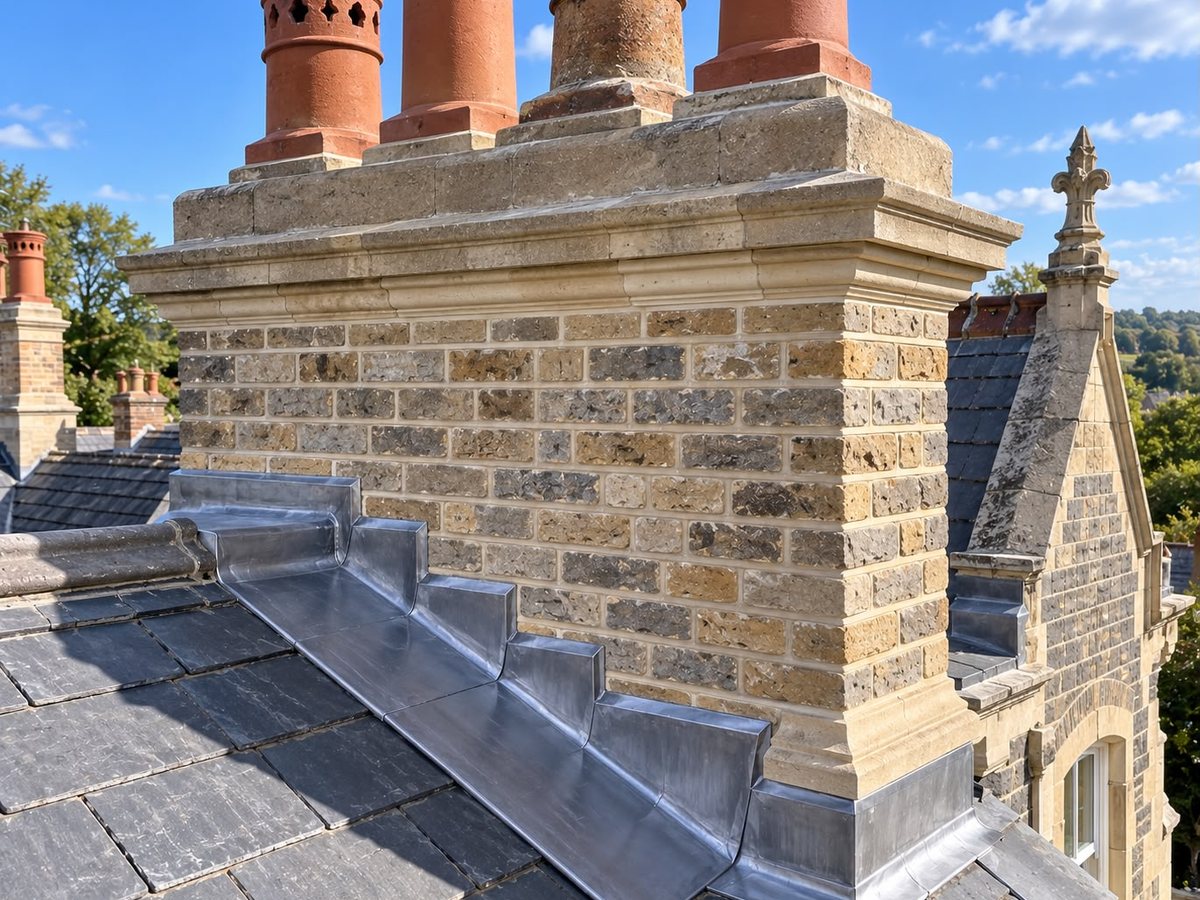
When does leadwork need renewing?
Lead is long-lasting, but it moves with heat and cold, and poor fixing or age eventually lets water in. Look out for:
Cracked or split lead
Splits from thermal movement, often where lengths are too long or over-fixed.
Lifted flashings
Flashings pulled away from the wall or chimney by wind or failed fixings.
Failed pointing
Mortar or sealant at the flashing joint has cracked or fallen out.
Leaks at junctions
Damp around chimney breasts, dormers or where roofs meet walls.
Blocked or worn valleys
Valleys full of debris, or worn thin so water backs up under the slates.
Old cement fillets
Cement or mortar fillets that crack and let water in where lead should be.
Theft or damage
Missing lead, or lead replaced with temporary patches that are now failing.
Patch or renew?
A small split can sometimes be repaired, but patching tired lead rarely lasts. Renewing it properly costs less than the water damage a failed flashing causes.
How long does leadwork last?
These are typical figures, not guarantees. Correctly detailed lead, laid in the right code and lengths, can outlast the roof it protects. Most early failures come from lengths that are too long, wrong fixings or no allowance for movement.
Laid to the right standard
We size, fix and detail lead to suit its position, following the Lead Sheet Training Academy (LSTA) guidance used across the trade, so it can move with the seasons without splitting.
How we renew roof leadwork
-
Stage 1
Inspection
We trace where water is getting in and check the condition of the lead, the pointing and the surrounding slates or tiles.
-
Stage 2
Removal
Old lead, failed fillets and pointing are carefully removed, along with the slates or tiles next to the joint where needed.
-
Stage 3
Preparation
Substrates, boards and timbers are checked and repaired, and an underlay is laid beneath lead valleys, gutters and flat areas.
-
Stage 4
Cutting and dressing
New lead in the right code is cut, bossed and dressed to fit the detail, from stepped flashings to valleys, aprons and roll-capped roofs.
-
Stage 5
Fixing
Lead is fixed with copper or stainless clips and wedged into chases cut into the mortar joints, in lengths that allow for movement.
-
Stage 6
Sealing and finishing
Chases are repointed, slates or tiles are reinstated, and the lead is treated with patination oil to stop staining.
Recent leadwork
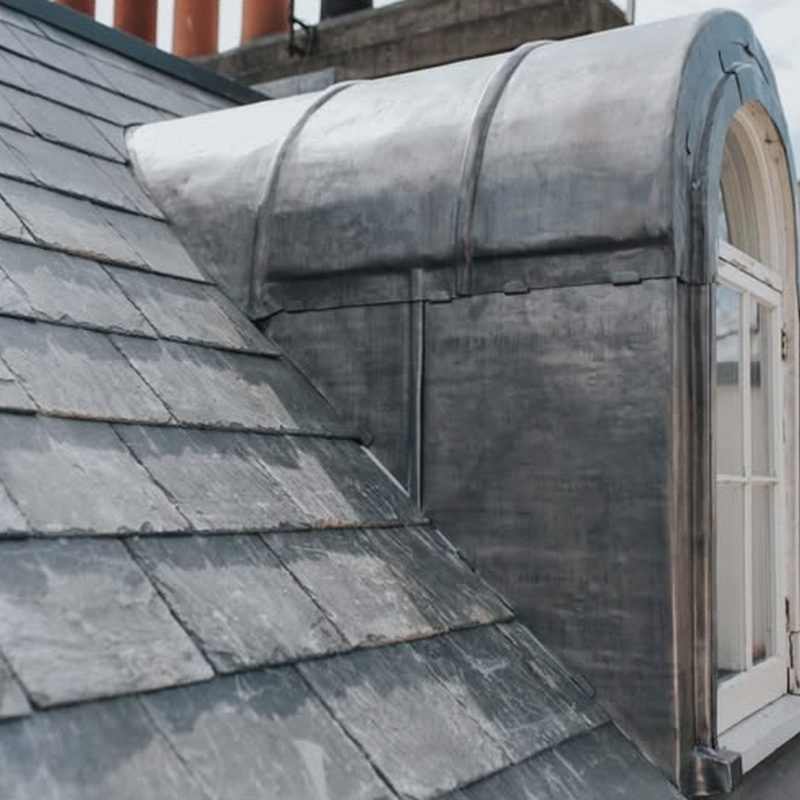
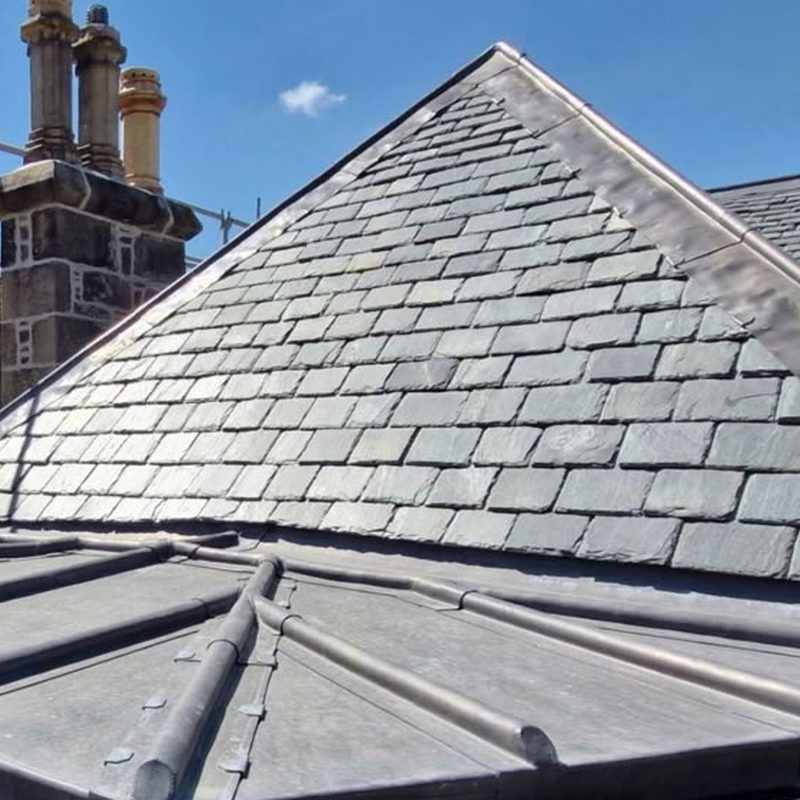
Leadwork we carry out
We handle every type of roof leadwork, on period and modern properties.
| Leadwork | Where it’s used |
|---|---|
| Step and cover flashings | Where a roof meets a chimney stack or wall |
| Lead valleys | Where two roof slopes meet, carrying water down to the gutter |
| Aprons and back gutters | Below and behind chimneys, dormers and rooflights |
| Lead-clad dormers and bays | Cheeks, roofs and cappings to dormers and bay windows |
| Lead flat roofs and gutters | Roll-capped flat roofs, parapet and box gutters |
Lead is valuable, so we can advise on discreet anti-theft measures, or on approved lead alternatives where suitable.
The benefits of new leadwork
Good leadwork keeps water out at the most vulnerable points of a roof.
- Stops leaks at junctions Seals the joints where most roof leaks start.
- Exceptionally long-lasting Correctly laid lead can last for generations.
- Moves with the building Lead flexes with heat, cold and settlement without cracking.
- Traditional appearance Ideal for period, listed and conservation properties.
- Fully recyclable Lead can be recycled again and again.
Leadwork & Roof Detailing questions
How long does lead flashing last?
Correctly specified and fixed lead flashing can last 60 to 100 years or more. Most early failures come from poor fixing, lengths that are too long or missing pointing.
Why is my chimney flashing leaking?
The most common causes are lifted or split lead, failed pointing in the chase, or old cement fillets cracking. We trace the leak before recommending repairs.
Can lead flashing be repaired, or does it need replacing?
Small defects and failed pointing can be repaired. Split or worn-out lead is best renewed, as patches rarely last.
What code of lead do you use?
It depends on the job. Code 4 is typical for flashings, and thicker Code 5 to 8 lead for valleys, gutters and flat roofs.
Need leadwork done?
Free site assessments and no-obligation quotes for leadwork work across Bristol, Somerset, Gloucestershire, Berkshire, Hampshire, Wiltshire, Oxfordshire and Worcestershire. We are happy to talk through projects of any size, from a single repair to a complete new roof.
Free site assessments
No charge, no obligation
We visit, assess and talk you through your options
Where we work
South West and Central England
Eight areas covered, listed below
Areas we cover
Request a free quote
Complete the form below and we will be in touch to arrange your free site assessment.
Enquiry received
Thank you for getting in touch. We will review your details and contact you to arrange your free site assessment and quote.
If you need to speak to us urgently, call 0800 122 3622.